
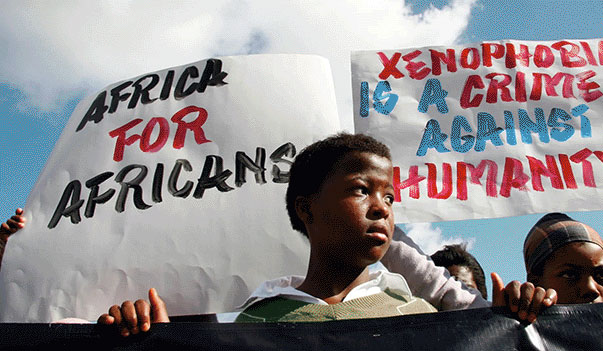
South Africa’s democratic transition was built on a powerful moral promise: that a society once defined by exclusion, racial hierarchy, and state-sanctioned violence would become one grounded in dignity, equality, and human rights. Yet, recurring waves of xenophobic violence and hostility toward African migrants threaten to undermine that very foundation. At its core, xenophobia is not only a social problem but also a constitutional and economic contradiction. South Africa’s Constitution guarantees equality and human dignity for all persons, not only citizens. When foreign nationals are attacked, displaced, or excluded from economic participation, it signals a failure to uphold those foundational values. In that sense, xenophobia is not just about “others”; it reflects on the integrity of the state itself.
Economically, xenophobia is self-defeating. Migrants in South Africa are often entrepreneurs, traders, workers, and service providers who contribute to local economies, create jobs, and fill gaps in informal and formal sectors. When violence or intimidation forces them to close businesses or relocate, communities lose income streams, investment, and economic vibrancy. Fear replaces commerce, and instability replaces productivity.
Historically, South Africa’s liberation struggle was deeply connected to the wider African continent. Many countries across Africa hosted South African exiles, supported liberation movements, and paid economic and political costs in solidarity. This history carries a moral responsibility: South Africa’s freedom was not achieved in isolation. It was a continental effort. To now turn inward against fellow Africans is to forget that shared history.